Acoustic Pipe Lagging Mistakes That Lead to Noise Complaints
In Melbourne’s growing multi-residential and commercial construction sector, acoustic performance is no longer a “nice to have” — it’s an expectation.
Apartments, townhouses, mixed-use developments, and even high-end commercial spaces are being designed with tighter tolerances, denser service layouts, and greater emphasis on occupant comfort. In this environment, acoustic pipe lagging plays a critical role in controlling noise transmission through building services.
Yet despite its importance, acoustic lagging is still frequently misunderstood, under-specified, or treated as a secondary consideration. For builders, developers, and project managers, understanding where acoustic pipe lagging commonly fails is essential to delivering compliant, NCC standards, and high-performing buildings.
Why Acoustic Pipe Lagging Matters in Modern Construction
Acoustic pipe lagging is designed to reduce the transmission of sound and vibration through pipework systems. In multi-residential developments, this typically relates to:
- Water flow noise in hot and cold-water services
- Drainage and waste pipe noise
- Vibration transfer through service risers
- Impact noise between apartments and shared walls
Without proper acoustic treatment, these sounds travel easily through rigid pipe systems and building structures.
In dense urban environments like Melbourne, where apartment living continues to grow, even minor acoustic issues can quickly escalate into formal complaints and warranty claims.
Correct acoustic lagging helps ensure that mechanical services operate quietly in the background, supporting occupant comfort and compliance with acoustic performance expectations.
Mistake #1: Treating Acoustic Lagging as an Optional Upgrade
One of the most common issues on construction projects is treating acoustic lagging as an optional extra rather than a core system requirement.
In reality, acoustic performance should be considered early in the design phase, not added after issues arise on site.
When acoustic lagging is excluded or value-engineered out of the specification, the building is often left exposed to:
- Pipe noise transmission through walls and ceilings
- Amplified water flow sounds in risers
- Vibration transfer between apartments
This often results in post-construction remediation, which is significantly more expensive and disruptive than proper upfront specification.
Mistake #2: Incorrect Material Selection for the Application
Not all pipe lagging materials provide acoustic performance. A common mistake is using thermal insulation products and assuming they will also address noise control.
Acoustic lagging typically requires materials designed specifically to absorb vibration and reduce sound transmission. In many cases, systems use layered solutions combining:
- Dense acoustic insulation
- Decoupling layers
- Protective outer coverings
Using the wrong material can significantly reduce system effectiveness, even if the thickness appears adequate on paper.
For example, lightweight foam insulation may provide thermal benefits but offers limited resistance to vibration or low-frequency pipe noise in multi-storey buildings.
Mistake #3: Insufficient Thickness for Acoustic Performance
Even when the correct material is selected, inadequate thickness remains a frequent issue.
Acoustic performance is highly dependent on mass and density. If insulation is too thin, sound energy is not sufficiently absorbed or dampened before it transfers through building elements.
Common consequences of under-thickness include:
Audible water flow in bathrooms and kitchens
Noise transfer through shared walls
Vibration along vertical risers
In apartment developments, this becomes particularly problematic because multiple units are often connected to the same service risers. A small specification error can therefore affect multiple dwellings simultaneously.
Mistake #4: Incomplete Coverage of Pipework
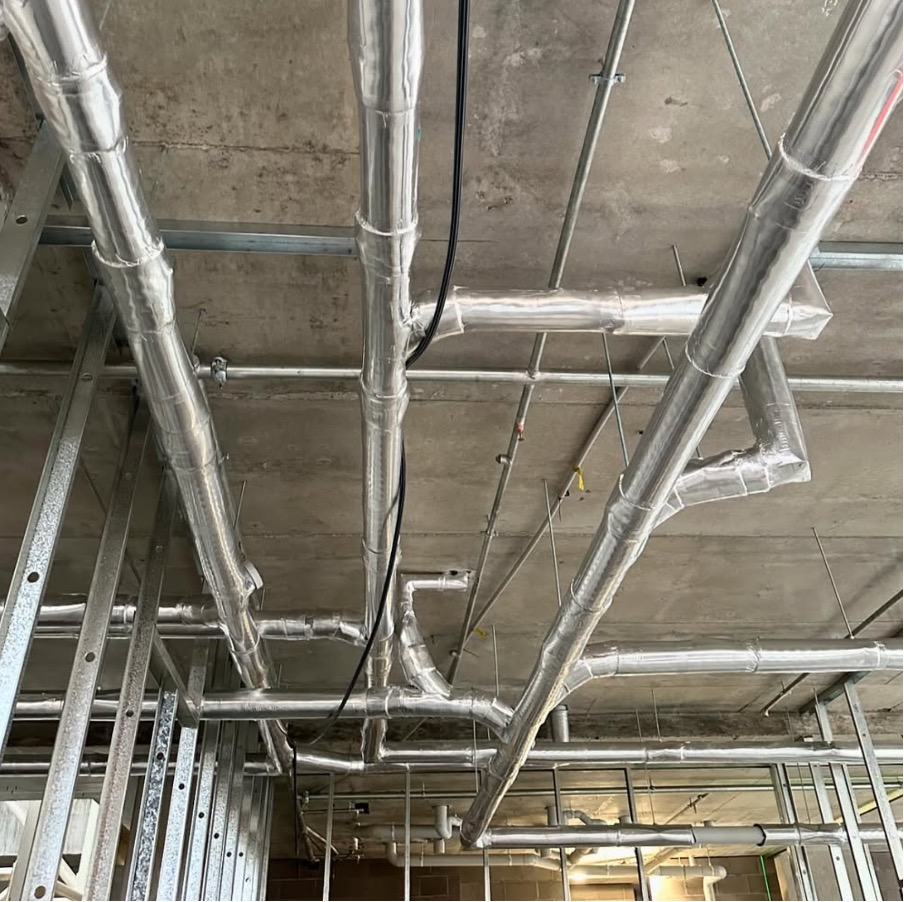
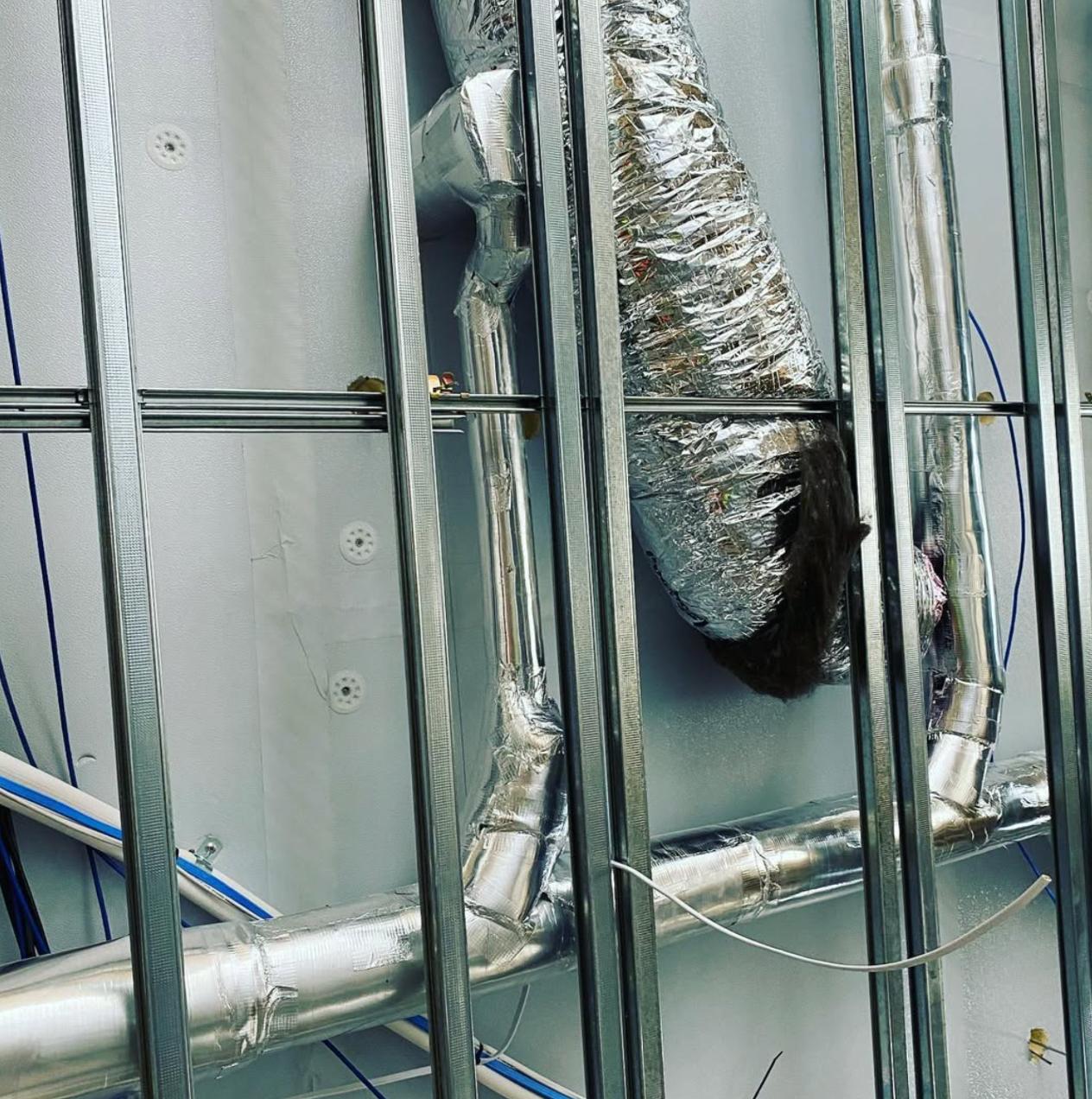
Acoustic lagging is only effective when it is applied continuously across the entire pipe run.
A frequent oversight on site is partial coverage, particularly around:
- Bends and junctions
- Penetrations through walls or slabs
- Valve and connection points
- Access-constrained areas within risers
These gaps create weak points where sound and vibration can bypass the insulation entirely.
In many cases, occupants perceive the building as “noisy”, even though most of the pipework is correctly insulated. The issue is often a few unprotected sections rather than the system as a whole.
Mistake #5: Poor Coordination With Building Services
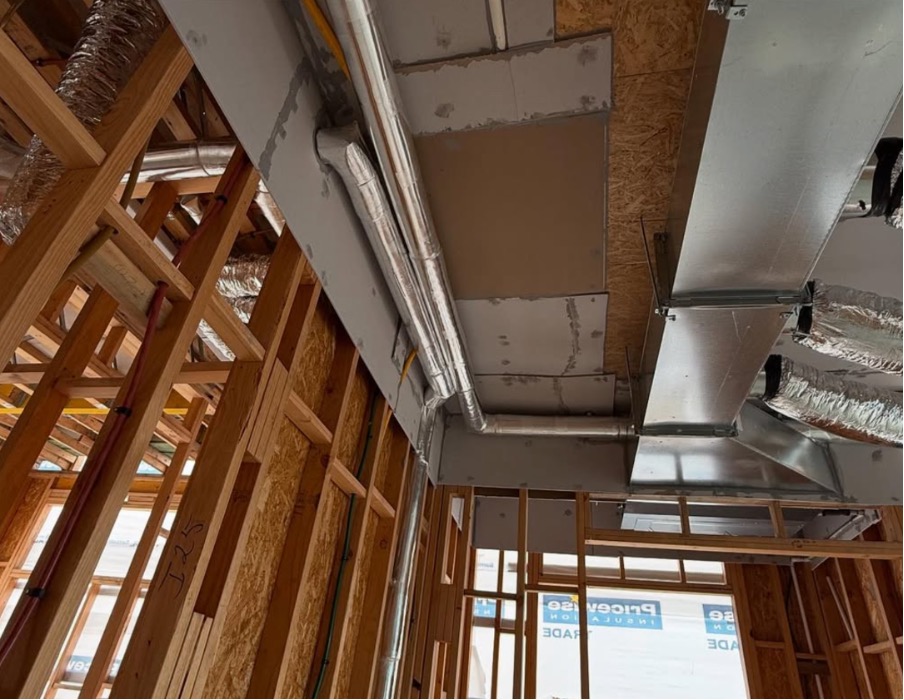
Acoustic pipe lagging does not operate in isolation. It must be coordinated with mechanical, hydraulic, and structural systems.
When coordination is poor, several issues can arise:
- Insufficient space in risers for acoustic insulation thickness
- Conflicts with fire-rated systems and penetrations
- Compression of insulation due to tight installation conditions
- Inability to maintain continuous coverage
Once services are installed and ceilings are closed, correcting these issues becomes expensive and disruptive.
Early coordination between builders, mechanical contractors, and lagging specialists is critical to ensuring acoustic performance can actually be achieved on site.
Mistake #6: Ignoring Structural Vibration Paths
Another common oversight is focusing only on pipe insulation while ignoring how vibration travels through the building structure itself.
Even well-insulated pipes can still transmit noise if:
- Pipe supports are rigidly fixed to structural elements
- There is no vibration isolation at contact points
- Services are hard-coupled to slabs or walls
In these cases, sound bypasses the insulation entirely and travels through the building frame.
Effective acoustic performance requires a system-based approach, not just insulation around pipework.
Mistake #7: Installing Acoustic Lagging Too Late in the Program
Timing is a major factor in acoustic lagging performance.
When insulation is installed late in the construction sequence, installers often face:
- Restricted access within completed service zones
- Pressure to work around other trades
- Compromised installation quality due to space limitations
- Incomplete sealing or coverage
- In multi-residential projects, this is one of the leading causes of acoustic defects at handover.
Once ceilings are closed and finishes are complete, rectification becomes significantly more complex.
The Impact of Acoustic Failures on Projects
Acoustic pipe lagging failures are rarely minor issues in modern developments.
They often lead to:
- Occupant complaints immediately after handover
- Defect rectification costs
- Potential disputes between owners and builders
- Reputational damage for developers and contractors
- Delays in final project sign-off
In apartment buildings, a single poorly performing riser can affect multiple units, compounding both cost and complexity.
Getting Acoustic Lagging Right From the Start
Delivering effective acoustic performance requires more than selecting a product. It depends on:
- Correct specification during design
- Appropriate material selection
- Adequate thickness and density
- Full coverage of pipework systems
- Proper coordination with other building services
- Early involvement of experienced installers
When these elements are addressed early, acoustic performance becomes a predictable outcome rather than a post-completion issue.
Get Acoustic Lagging Done Right From the Start
As Melbourne continues to move toward higher-density living and more complex building services, acoustic performance is becoming a key measure of project quality.
Pipe lagging plays a direct role in how buildings sound, feel, and function once occupied. When it is underestimated or incorrectly specified, the consequences are almost always experienced after handover when rectification is most expensive and disruptive.
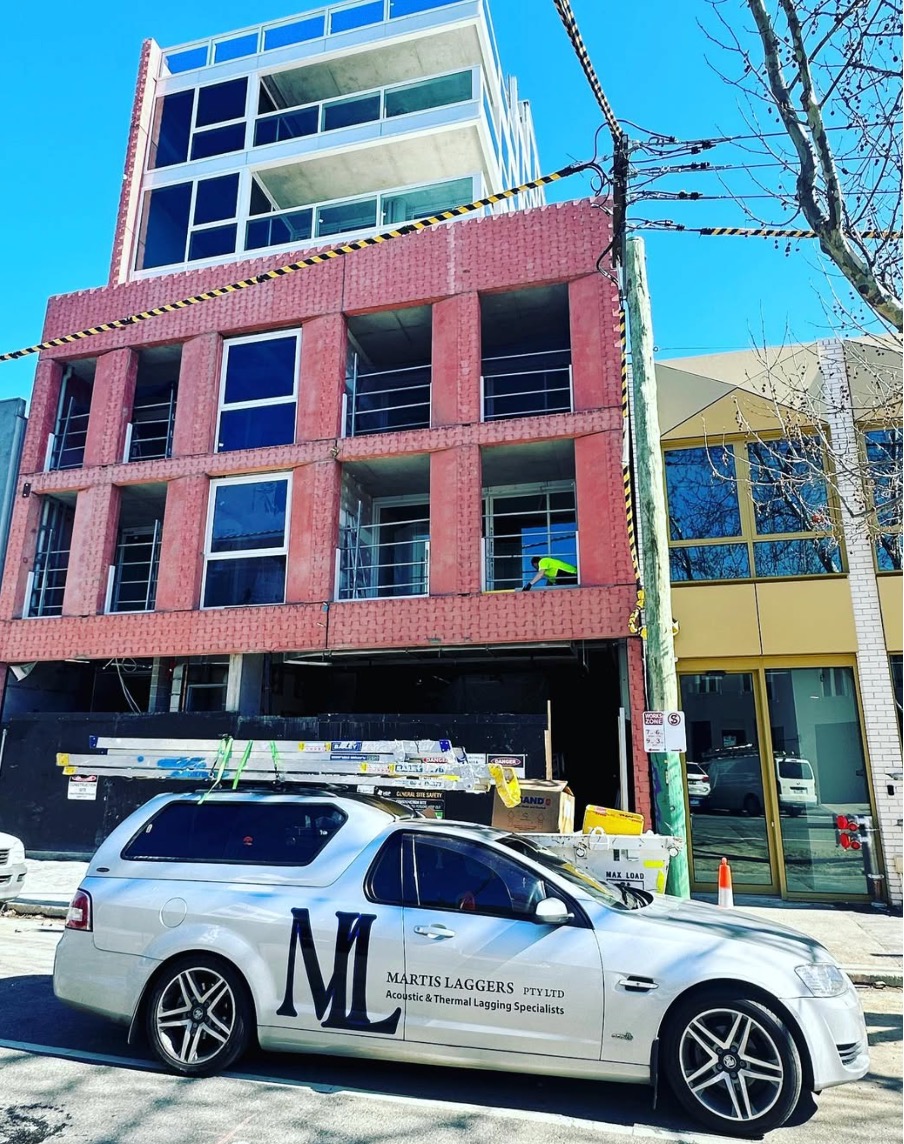
Martis Laggers works closely with Melbourne builders, developers, and contractors to ensure acoustic pipe lagging systems are specified and installed correctly, helping projects avoid noise issues, reduce defects, and achieve better long-term performance.
Disclaimer
This article is provided free of charge for public information. We do not guarantee, and accept no legal liability for, the accuracy, reliability, currency, or completeness of the content or any linked material. Users should apply their own judgment and verify the material’s relevance to their needs. This article is a general summary and not a substitute for legal or professional advice. Users should seek appropriate advice for their circumstances. Any third-party views expressed do not necessarily reflect ours or imply endorsement.